⏳ Why do mixed conditionals exist?
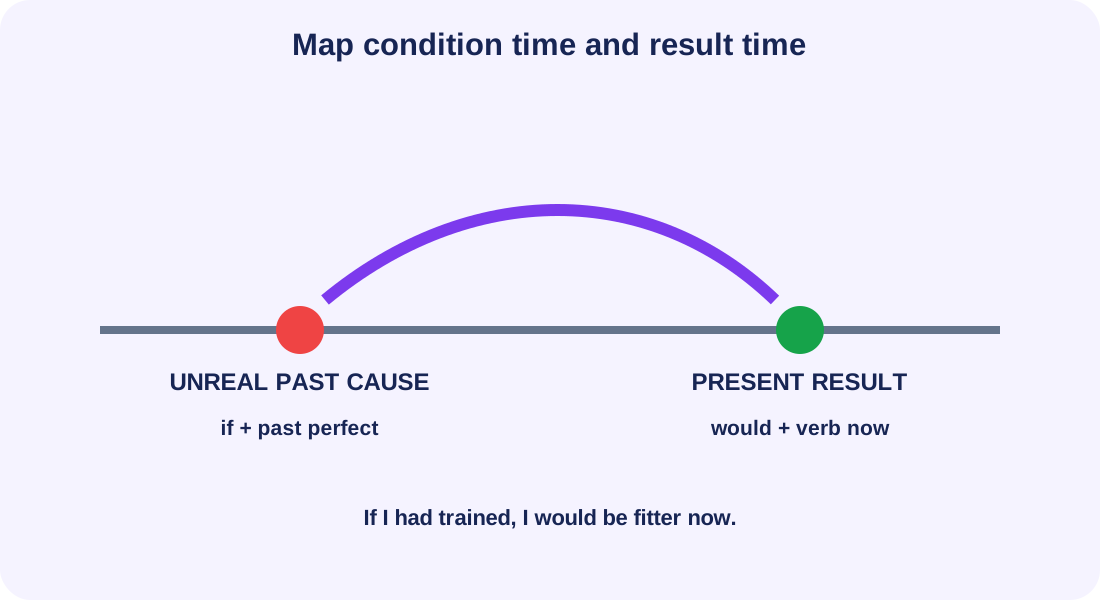
Cause and result may belong to different times. If I had studied medicine, I would be a doctor now links an unreal past choice to a present result.
Useful patterns
- Real possibility: if + present, will/may + verb.
- Present hypothesis: if + past, would + verb.
- Past counterfactual: if + past perfect, would have + past participle.
- Past cause → present result: if + past perfect, would + verb now.
⚠️ Past form does not always mean past time
In a present hypothetical, the past form marks distance from reality: If I knew the answer now... Formal English often uses were for all persons in If I were...
🔎 Avoid automatic “will” in the if-clause
In ordinary conditions, use present after if. Will may occur for willingness or insistence, which is a different meaning.
📚 Lý thuyết trọng tâm
Mục tiêu: Use real, hypothetical and mixed conditionals by mapping cause and result to present or past time rather than memorizing labels alone.. Khi học Conditionals and mixed time: match the verb form to the real time relationship, hãy xác định khái niệm, điều kiện áp dụng và mối liên hệ giữa các dữ kiện; không chỉ ghi nhớ kết luận.
🧭 Ví dụ có hướng dẫn
Chọn một tình huống điển hình của bài. Bước 1: ghi dữ kiện và câu hỏi cần giải quyết. Bước 2: chọn khái niệm hoặc quy tắc phù hợp. Bước 3: giải thích từng bước và kiểm tra kết quả với điều kiện ban đầu. Nếu đổi một dữ kiện, hãy dự đoán kết quả thay đổi thế nào.
✍️ Luyện tập
- Tóm tắt bài bằng ba ý: khái niệm, điều kiện và kết luận.
- Tự tạo một ví dụ đúng và một phản ví dụ; chỉ ra điểm quyết định.
- Giải lại ví dụ khi thay đổi một dữ kiện, sau đó nêu cách kiểm chứng.
Checklist tự đánh giá
- Tôi giải thích được “vì sao”, không chỉ nêu đáp án.
- Tôi nhận ra trường hợp không áp dụng được quy tắc.
- Tôi kiểm tra được đơn vị, bằng chứng hoặc tính hợp lí của kết luận.
Cùng nhau hiểu bài sâu hơn
Viết lời giải, công thức, đặt câu hỏi hoặc gửi ảnh phần bạn đang vướng.
Đăng nhập để đặt câu hỏi và tham gia trao đổi.
Chưa có trao đổi nào. Hãy là người đầu tiên đặt câu hỏi nhé.