⏳ A past choice can explain a present situation
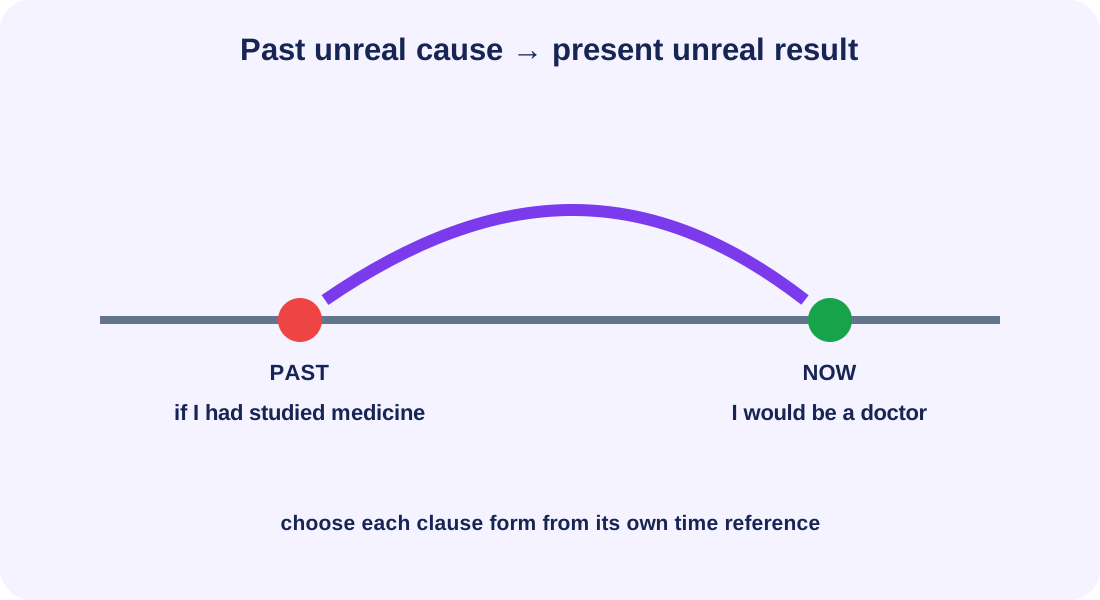
If I had studied medicine, I would be a doctor now combines an unreal past condition with a present unreal result. The two clauses use different forms because they refer to different times.
Two useful patterns
- Past cause → present result: if + past perfect, would + base verb now.
- Present state → past result: if + past simple, would have + past participle.
Example of the second pattern
If she were more careful, she would not have made that mistake yesterday. Her general present characteristic is used to explain a past outcome.
⚠️ Do not mix forms randomly
A mixed conditional needs a meaningful cross-time cause. If both condition and result concern the past, use the third conditional instead.
🔎 Reality paraphrase
Write the facts first: “I did not study medicine; I am not a doctor now.” Then build the counterfactual link.
📚 Lý thuyết trọng tâm
Mục tiêu: Build mixed conditionals by locating the unreal condition and result on different parts of a timeline.. Khi học Mixed conditionals: connect a past cause to a present result, hãy xác định khái niệm, điều kiện áp dụng và mối liên hệ giữa các dữ kiện; không chỉ ghi nhớ kết luận.
🧭 Ví dụ có hướng dẫn
Chọn một tình huống điển hình của bài. Bước 1: ghi dữ kiện và câu hỏi cần giải quyết. Bước 2: chọn khái niệm hoặc quy tắc phù hợp. Bước 3: giải thích từng bước và kiểm tra kết quả với điều kiện ban đầu. Nếu đổi một dữ kiện, hãy dự đoán kết quả thay đổi thế nào.
✍️ Luyện tập
- Tóm tắt bài bằng ba ý: khái niệm, điều kiện và kết luận.
- Tự tạo một ví dụ đúng và một phản ví dụ; chỉ ra điểm quyết định.
- Giải lại ví dụ khi thay đổi một dữ kiện, sau đó nêu cách kiểm chứng.
Checklist tự đánh giá
- Tôi giải thích được “vì sao”, không chỉ nêu đáp án.
- Tôi nhận ra trường hợp không áp dụng được quy tắc.
- Tôi kiểm tra được đơn vị, bằng chứng hoặc tính hợp lí của kết luận.
Cùng nhau hiểu bài sâu hơn
Viết lời giải, công thức, đặt câu hỏi hoặc gửi ảnh phần bạn đang vướng.
Đăng nhập để đặt câu hỏi và tham gia trao đổi.
Chưa có trao đổi nào. Hãy là người đầu tiên đặt câu hỏi nhé.