🛠️ Who actually performs the service?
In I had my laptop repaired, the subject arranged for another person to repair it. The pattern is have/get + object + past participle. It focuses on the service or result; the agent may be unknown or unimportant.
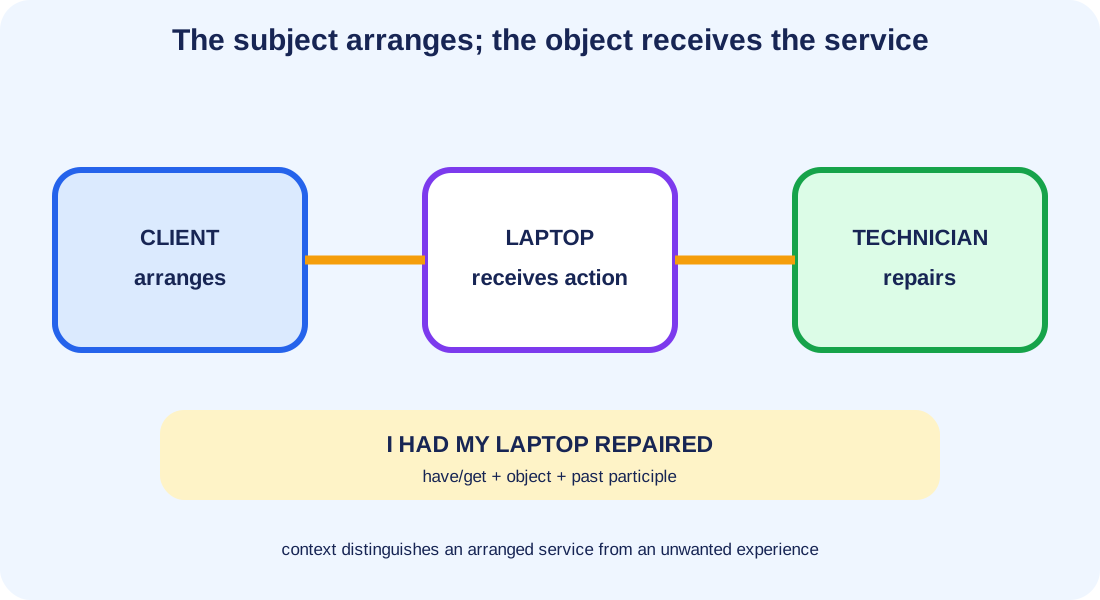
Compare the patterns
- I repaired my laptop. — I did the work.
- I had my laptop repaired. — I arranged the service.
- I had the technician repair it. — have + person + base verb.
- I got the technician to repair it. — get + person + to-infinitive.
Time is carried by have/get
She is having the room painted, They will get the lock changed. The participle stays in its form while the causative verb changes for tense and agreement.
⚠️ Context may express an unwanted experience
He had his phone stolen normally means he experienced the theft, not that he deliberately arranged it. Grammar supplies the affected-event pattern; real-world meaning and context determine whether it was arranged.
📚 Căn cứ biên soạn
- Chương trình GDPT 2018.
- Mạch kiến thức Kết nối tri thức với cuộc sống lớp 11 và Quyết định 3588/QĐ-BGDĐT.
- Nội dung biên soạn độc lập, ưu tiên phân tích bằng chứng, mô hình hóa và kiểm tra điều kiện áp dụng.
📚 Lý thuyết trọng tâm
Mục tiêu: Use have/get something done for arranged services, distinguish it from doing the action oneself and from have someone do/get someone to do, while reading context for unwanted events.. Khi học Causative have/get: arrange a service without confusing the agent, hãy xác định khái niệm, điều kiện áp dụng và mối liên hệ giữa các dữ kiện; không chỉ ghi nhớ kết luận.
🧭 Ví dụ có hướng dẫn
Chọn một tình huống điển hình của bài. Bước 1: ghi dữ kiện và câu hỏi cần giải quyết. Bước 2: chọn khái niệm hoặc quy tắc phù hợp. Bước 3: giải thích từng bước và kiểm tra kết quả với điều kiện ban đầu. Nếu đổi một dữ kiện, hãy dự đoán kết quả thay đổi thế nào.
✍️ Luyện tập
- Tóm tắt bài bằng ba ý: khái niệm, điều kiện và kết luận.
- Tự tạo một ví dụ đúng và một phản ví dụ; chỉ ra điểm quyết định.
- Giải lại ví dụ khi thay đổi một dữ kiện, sau đó nêu cách kiểm chứng.
Checklist tự đánh giá
- Tôi giải thích được “vì sao”, không chỉ nêu đáp án.
- Tôi nhận ra trường hợp không áp dụng được quy tắc.
- Tôi kiểm tra được đơn vị, bằng chứng hoặc tính hợp lí của kết luận.
Cùng nhau hiểu bài sâu hơn
Viết lời giải, công thức, đặt câu hỏi hoặc gửi ảnh phần bạn đang vướng.
Đăng nhập để đặt câu hỏi và tham gia trao đổi.
Chưa có trao đổi nào. Hãy là người đầu tiên đặt câu hỏi nhé.