🧩 “The list of names is” or “are” on the desk?
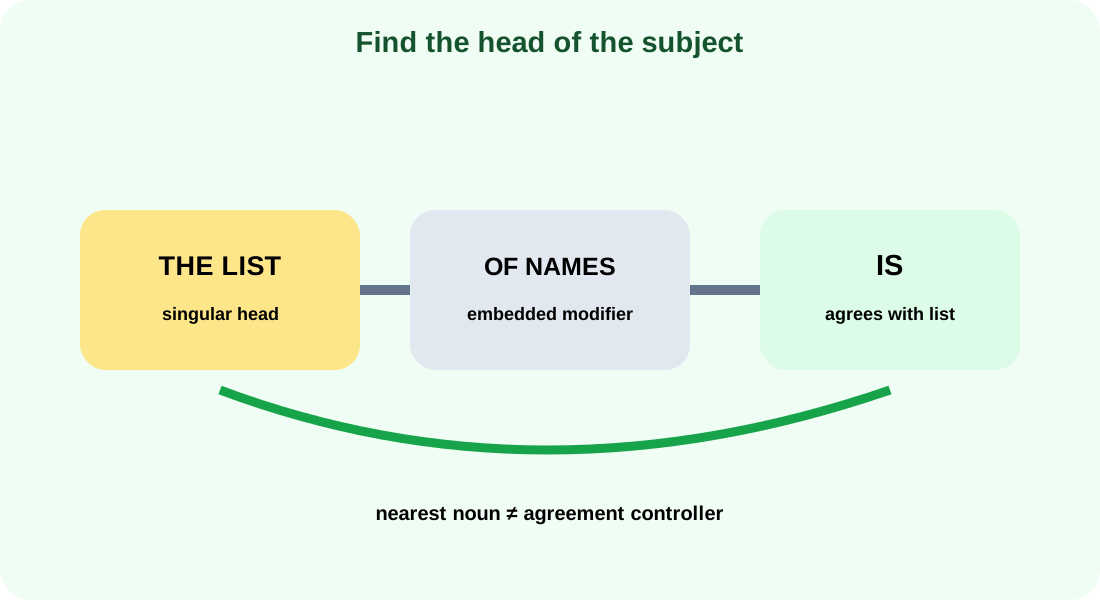
The subject head is singular list. The phrase of names modifies it but does not control agreement, so: The list of names is on the desk.
Meaning and structure both matter
- Each/every + singular noun: Each answer is checked.
- A number of + plural noun: A number of students are absent.
- The number of + plural noun: The number of students is rising.
- With either…or, formal usage often agrees with the nearer coordinated subject.
Relative clauses can hide the controller
She is one of the students who work late: who refers to plural students. Compare She is the only one of the students who works late, where the intended antecedent is the only one.
⚠️ Do not choose by the closest noun automatically
In The quality of the pictures has improved, plural pictures is close to the verb but sits inside an of-phrase. Singular quality controls has.
✅ Bracket the subject
Put brackets around the full subject, cross out embedded modifiers, underline the head and then choose the verb. Finally read for special quantity expressions.
📚 Lý thuyết trọng tâm
Mục tiêu: Match the verb with the head of the subject phrase, not the nearest noun; handle each, a number of and the number of.. Khi học Subject–verb agreement: find the head, ignore the distraction, hãy xác định khái niệm, điều kiện áp dụng và mối liên hệ giữa các dữ kiện; không chỉ ghi nhớ kết luận.
🧭 Ví dụ có hướng dẫn
Chọn một tình huống điển hình của bài. Bước 1: ghi dữ kiện và câu hỏi cần giải quyết. Bước 2: chọn khái niệm hoặc quy tắc phù hợp. Bước 3: giải thích từng bước và kiểm tra kết quả với điều kiện ban đầu. Nếu đổi một dữ kiện, hãy dự đoán kết quả thay đổi thế nào.
✍️ Luyện tập
- Tóm tắt bài bằng ba ý: khái niệm, điều kiện và kết luận.
- Tự tạo một ví dụ đúng và một phản ví dụ; chỉ ra điểm quyết định.
- Giải lại ví dụ khi thay đổi một dữ kiện, sau đó nêu cách kiểm chứng.
Checklist tự đánh giá
- Tôi giải thích được “vì sao”, không chỉ nêu đáp án.
- Tôi nhận ra trường hợp không áp dụng được quy tắc.
- Tôi kiểm tra được đơn vị, bằng chứng hoặc tính hợp lí của kết luận.
Cùng nhau hiểu bài sâu hơn
Viết lời giải, công thức, đặt câu hỏi hoặc gửi ảnh phần bạn đang vướng.
Đăng nhập để đặt câu hỏi và tham gia trao đổi.
Chưa có trao đổi nào. Hãy là người đầu tiên đặt câu hỏi nhé.