💬 Must every verb move one step into the past?
No. Backshift is common after a past reporting verb because the speaker looks back from a later time, but grammar should preserve meaning. A fact that is still true, or a report made immediately, may keep its original tense.
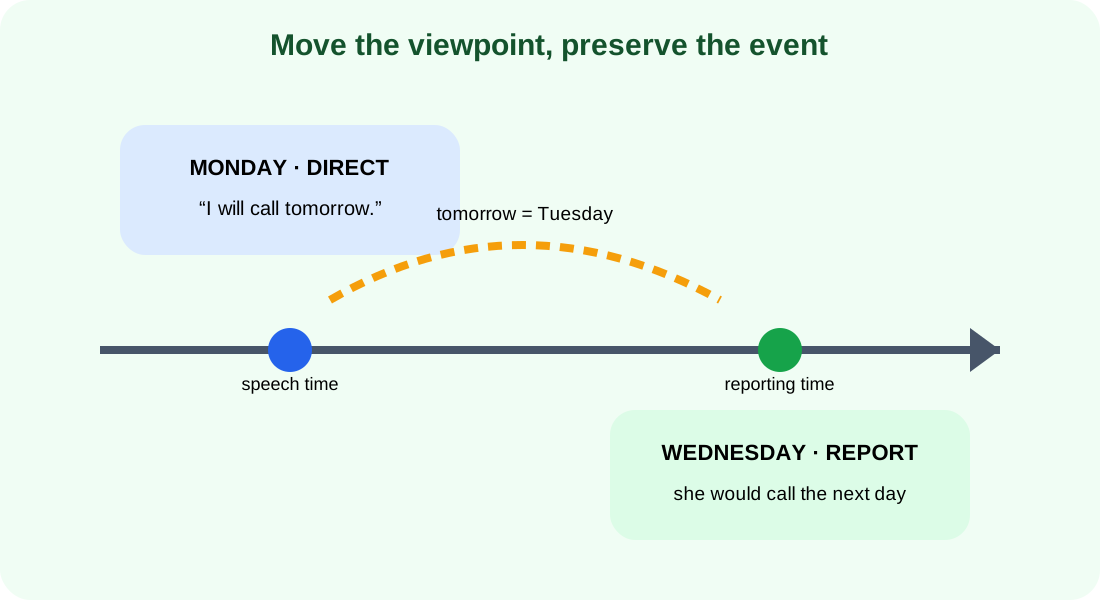
A meaning-first checklist
- Speaker and listener: change pronouns to keep the same people.
- Time and place: decide whether now, today, tomorrow or here still points to the same context.
- Tense: backshift when viewing the event from a later past perspective; keep a tense when the fact remains current and clarity requires it.
“I will submit it tomorrow,” Lan said on Monday.
Reporting on Wednesday: Lan said that she would submit it the next day. “Tomorrow” meant Tuesday, not the day after our report. If we report the sentence on Monday in the same place, tomorrow may remain natural.
⚠️ Do not transform words mechanically
“The Earth orbits the Sun,” the teacher said can become The teacher said that the Earth orbits the Sun because the scientific fact remains true. Also distinguish said from told: told normally needs an object—told us.
✅ Rebuild the message
First identify the original reference time. Then place the reporting event on a timeline, update pronouns and deictic words, and read the result to check that it still refers to the intended event.
📚 Lý thuyết trọng tâm
Mục tiêu: Report what someone said by checking reporting time, viewpoint and whether the statement is still true.. Khi học Reported speech: keep the meaning and time reference, hãy xác định khái niệm, điều kiện áp dụng và mối liên hệ giữa các dữ kiện; không chỉ ghi nhớ kết luận.
🧭 Ví dụ có hướng dẫn
Chọn một tình huống điển hình của bài. Bước 1: ghi dữ kiện và câu hỏi cần giải quyết. Bước 2: chọn khái niệm hoặc quy tắc phù hợp. Bước 3: giải thích từng bước và kiểm tra kết quả với điều kiện ban đầu. Nếu đổi một dữ kiện, hãy dự đoán kết quả thay đổi thế nào.
✍️ Luyện tập
- Tóm tắt bài bằng ba ý: khái niệm, điều kiện và kết luận.
- Tự tạo một ví dụ đúng và một phản ví dụ; chỉ ra điểm quyết định.
- Giải lại ví dụ khi thay đổi một dữ kiện, sau đó nêu cách kiểm chứng.
Checklist tự đánh giá
- Tôi giải thích được “vì sao”, không chỉ nêu đáp án.
- Tôi nhận ra trường hợp không áp dụng được quy tắc.
- Tôi kiểm tra được đơn vị, bằng chứng hoặc tính hợp lí của kết luận.
Cùng nhau hiểu bài sâu hơn
Viết lời giải, công thức, đặt câu hỏi hoặc gửi ảnh phần bạn đang vướng.
Đăng nhập để đặt câu hỏi và tham gia trao đổi.
Chưa có trao đổi nào. Hãy là người đầu tiên đặt câu hỏi nhé.