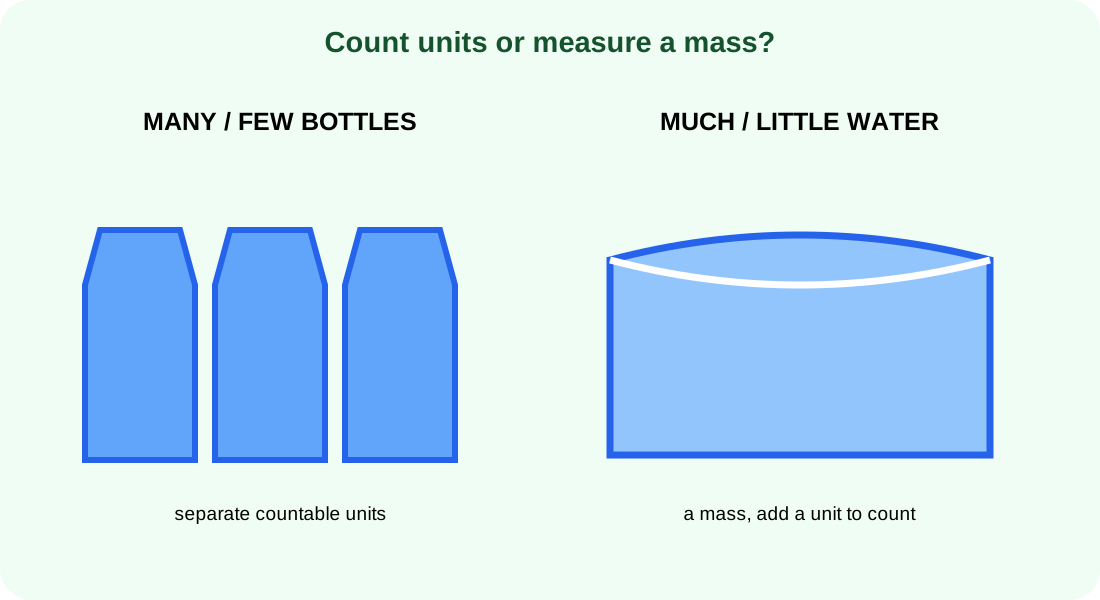
🥛 Why is it “many bottles” but “much water”?
Grammar counts the units named by the noun. Bottle is a countable container, while water is normally treated as a mass. We can count water only after adding a unit: three bottles of water.
The article changes the attitude
- a few students: some students—enough to be useful.
- few students: almost none—a negative or insufficient view.
- a little time: some time remains.
- little time: hardly any time remains.
One noun can shift meaning
There is little room means little space. There are few rooms counts separate rooms. Two coffees is possible in a café because it means two servings, although coffee as a substance is uncountable.
⚠️ “Much” is not always the natural positive choice
Much is common in questions, negatives and formal styles: Do we have much time? In everyday positive statements, We have a lot of time is often more natural than We have much time.
✅ Name the unit first
Ask whether the noun names separate units in this meaning. Then choose quantity and attitude: enough, not enough, or neutral. Do not decide from Vietnamese translation alone.
📚 Lý thuyết trọng tâm
Mục tiêu: Choose quantifiers by countability and intended attitude; distinguish a few from few and a little from little.. Khi học Much, many, few, little: quantity depends on countability, hãy xác định khái niệm, điều kiện áp dụng và mối liên hệ giữa các dữ kiện; không chỉ ghi nhớ kết luận.
🧭 Ví dụ có hướng dẫn
Chọn một tình huống điển hình của bài. Bước 1: ghi dữ kiện và câu hỏi cần giải quyết. Bước 2: chọn khái niệm hoặc quy tắc phù hợp. Bước 3: giải thích từng bước và kiểm tra kết quả với điều kiện ban đầu. Nếu đổi một dữ kiện, hãy dự đoán kết quả thay đổi thế nào.
✍️ Luyện tập
- Tóm tắt bài bằng ba ý: khái niệm, điều kiện và kết luận.
- Tự tạo một ví dụ đúng và một phản ví dụ; chỉ ra điểm quyết định.
- Giải lại ví dụ khi thay đổi một dữ kiện, sau đó nêu cách kiểm chứng.
Checklist tự đánh giá
- Tôi giải thích được “vì sao”, không chỉ nêu đáp án.
- Tôi nhận ra trường hợp không áp dụng được quy tắc.
- Tôi kiểm tra được đơn vị, bằng chứng hoặc tính hợp lí của kết luận.
Cùng nhau hiểu bài sâu hơn
Viết lời giải, công thức, đặt câu hỏi hoặc gửi ảnh phần bạn đang vướng.
Đăng nhập để đặt câu hỏi và tham gia trao đổi.
Chưa có trao đổi nào. Hãy là người đầu tiên đặt câu hỏi nhé.