👟 “I need new shoes. I like the blue ones.” Are they the same shoes?
Ones replaces the plural count noun shoes while selecting members described as blue. By contrast, they normally points back to the same shoes already identified.
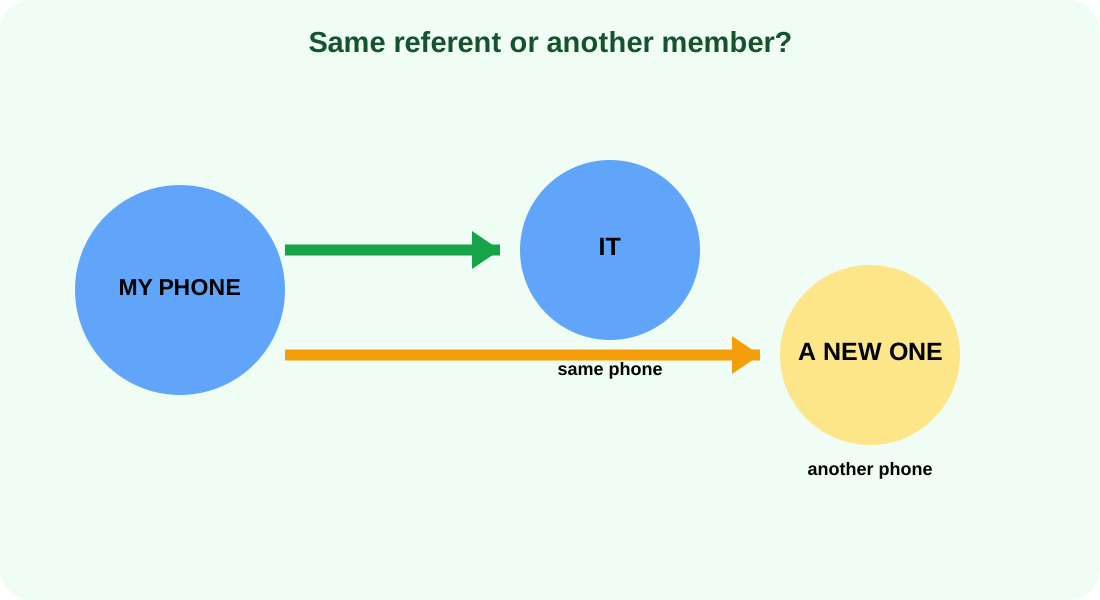
Track same versus another
- My phone is slow. I need a new one.—another phone.
- I bought a phone. It is fast.—the same phone.
- One/ones needs a countable noun concept; for uncountable nouns, repeat or omit the noun differently: fresh water, not polluted water.
Modifiers can identify the substitute
Which cable do you want? The longer one on the desk. The adjective and prepositional phrase narrow the class. Bare one can also be generic: One should check the source, a more formal use with different meaning.
⚠️ Do not use one after a possessive determiner
Standard English says my old laptop or my old one, not my one in this substitution pattern. Also avoid an information one because information is uncountable.
✅ Ask identity and countability
Same object: it/they. Another member of a countable class: one/ones. Then add modifiers needed to identify which alternative.
📚 Lý thuyết trọng tâm
Mục tiêu: Use one/ones for another member of a countable class and it/they for the same identified referent.. Khi học One, ones, it: replace without losing the reference, hãy xác định khái niệm, điều kiện áp dụng và mối liên hệ giữa các dữ kiện; không chỉ ghi nhớ kết luận.
🧭 Ví dụ có hướng dẫn
Chọn một tình huống điển hình của bài. Bước 1: ghi dữ kiện và câu hỏi cần giải quyết. Bước 2: chọn khái niệm hoặc quy tắc phù hợp. Bước 3: giải thích từng bước và kiểm tra kết quả với điều kiện ban đầu. Nếu đổi một dữ kiện, hãy dự đoán kết quả thay đổi thế nào.
✍️ Luyện tập
- Tóm tắt bài bằng ba ý: khái niệm, điều kiện và kết luận.
- Tự tạo một ví dụ đúng và một phản ví dụ; chỉ ra điểm quyết định.
- Giải lại ví dụ khi thay đổi một dữ kiện, sau đó nêu cách kiểm chứng.
Checklist tự đánh giá
- Tôi giải thích được “vì sao”, không chỉ nêu đáp án.
- Tôi nhận ra trường hợp không áp dụng được quy tắc.
- Tôi kiểm tra được đơn vị, bằng chứng hoặc tính hợp lí của kết luận.
Cùng nhau hiểu bài sâu hơn
Viết lời giải, công thức, đặt câu hỏi hoặc gửi ảnh phần bạn đang vướng.
Đăng nhập để đặt câu hỏi và tham gia trao đổi.
Chưa có trao đổi nào. Hãy là người đầu tiên đặt câu hỏi nhé.