🧭 Similar forms can create very different rules
Must often presents a strong requirement from the speaker, rule or immediate situation. Have to commonly highlights an external requirement. The distinction is a tendency, not an absolute division in every context.
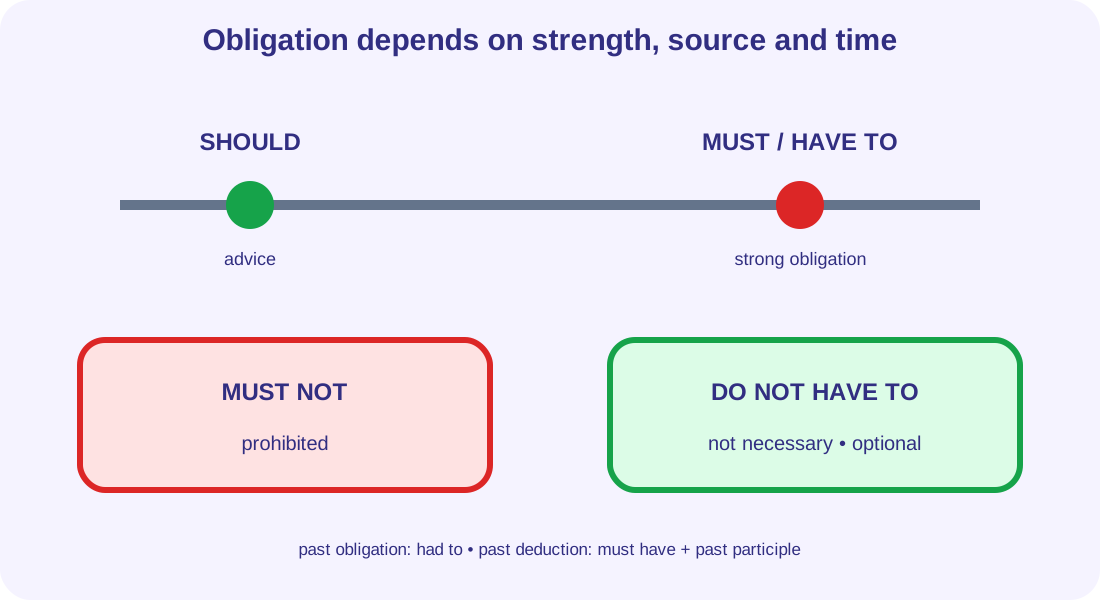
Core meanings
- should / ought to: advice or expected good action.
- must / have to: strong necessity or obligation.
- must not: prohibition.
- do not have to / need not: lack of necessity.
Time matters
For a completed past obligation, use had to: “We had to submit it yesterday.” Must have + past participle normally expresses a strong deduction about the past, not past obligation: “She must have forgotten.”
⚠️ Read the communicative situation
Strength depends on authority, relationship, politeness and consequences. A grammatically strong modal can be inappropriate if the speaker lacks authority; an official notice may use concise forms for clarity.
📚 Căn cứ biên soạn
- Chương trình GDPT 2018.
- Mạch kiến thức Kết nối tri thức với cuộc sống lớp 10 và Quyết định 3588/QĐ-BGDĐT.
- Nội dung biên soạn độc lập, ưu tiên bằng chứng, bối cảnh và giới hạn suy luận.
Cùng nhau hiểu bài sâu hơn
Viết lời giải, công thức, đặt câu hỏi hoặc gửi ảnh phần bạn đang vướng.
Đăng nhập để đặt câu hỏi và tham gia trao đổi.
Chưa có trao đổi nào. Hãy là người đầu tiên đặt câu hỏi nhé.