Chuẩn biên tập: Kết nối tri thức với cuộc sống – giải thích bằng bằng chứng và kiểm thử.
🗓️ Several routes to future time
Will often marks a decision made now, an offer or opinion-based prediction. Be going to commonly marks prior intention or prediction from present evidence.
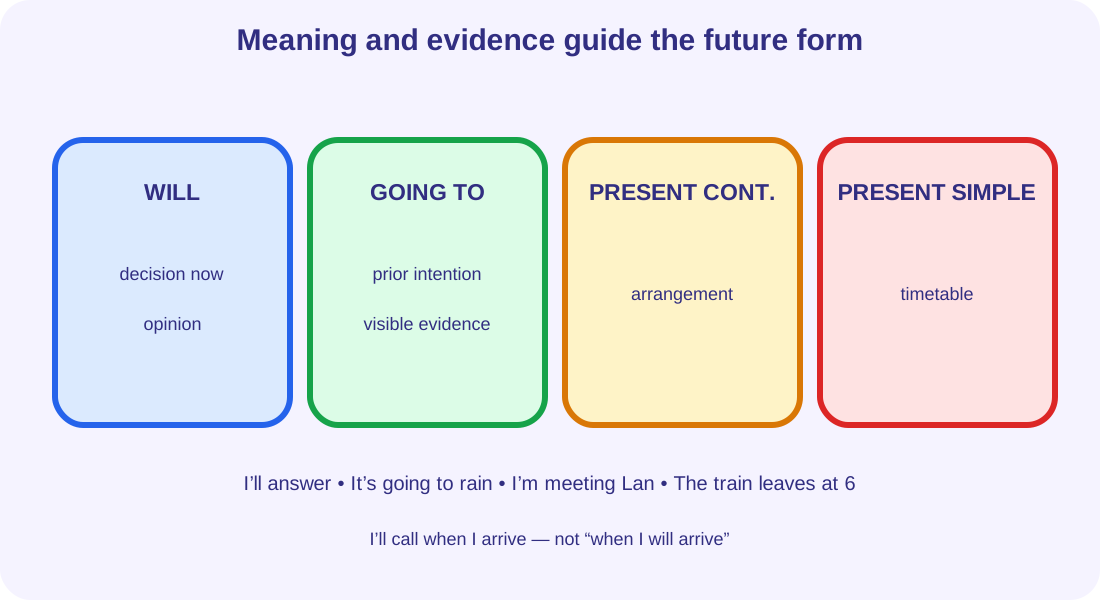
- Present continuous: concrete personal arrangement — “I’m meeting Lan at 3.”
- Present simple: official timetable — “The train leaves at 6:10.”
- Going to: prior intention or visible evidence.
- Will: decision at the moment of speaking or an opinion.
⚠️ Future time clauses
After when, before, after, as soon as, until, normally use a present form: “I’ll call when I arrive,” not “when I will arrive.”
📚 Căn cứ biên soạn
- Chương trình Giáo dục phổ thông 2018 và yêu cầu cần đạt.
- Bộ sách Kết nối tri thức với cuộc sống lớp 10, sử dụng thống nhất toàn quốc từ năm học 2026–2027 theo Quyết định 3588/QĐ-BGDĐT.
- Nội dung biên soạn độc lập, chú trọng bằng chứng, ngữ cảnh, chuỗi quá trình và kiểm thử.
Cùng nhau hiểu bài sâu hơn
Viết lời giải, công thức, đặt câu hỏi hoặc gửi ảnh phần bạn đang vướng.
Đăng nhập để đặt câu hỏi và tham gia trao đổi.
Chưa có trao đổi nào. Hãy là người đầu tiên đặt câu hỏi nhé.