😴 Is the student boring—or bored?
The student is bored describes how the student feels. The lesson is boring describes the lesson as a cause of boredom. The ending is chosen by semantic role, not simply by whether the noun is a person or a thing.
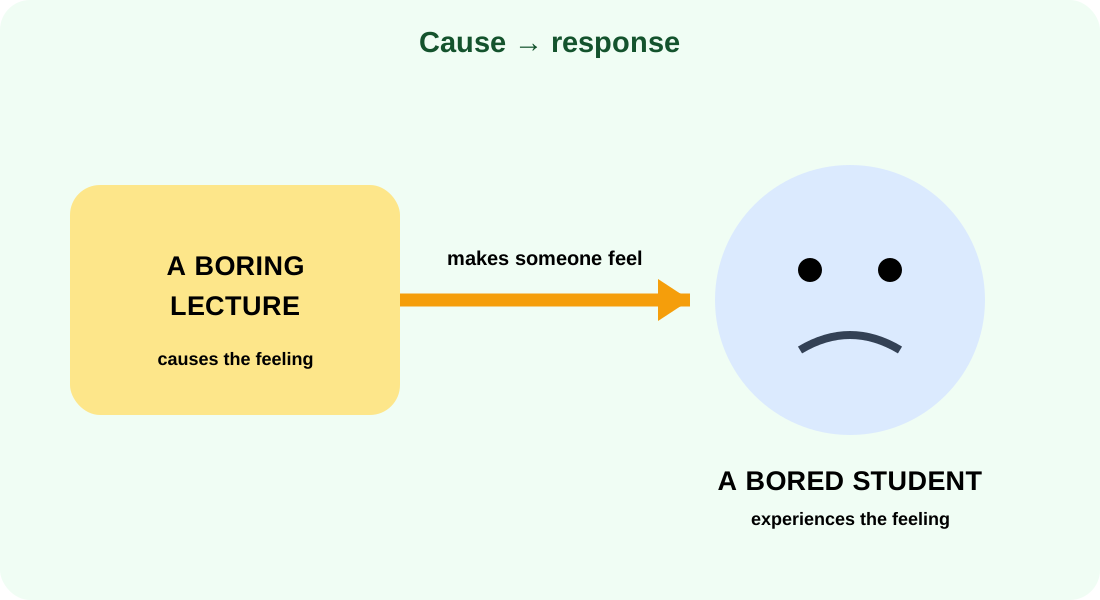
Follow the direction of meaning
- cause → -ing: an exciting match, a confusing instruction, a tiring journey.
- experience → -ed: excited fans, confused readers, tired travellers.
- A person can be boring when they cause boredom; news can be surprising although it is not alive.
One event, two descriptions
The result surprised Mai. The result was surprising, and Mai was surprised. Rewriting the underlying verb helps reveal who causes the response and who experiences it.
⚠️ Not every word ending in -ed or -ing follows this pair
The pattern is useful for participial adjectives connected to emotional or mental responses. Do not force it onto unrelated forms. Also check whether the word is functioning as a verb: The film is boring the children describes an ongoing action.
✅ Use the verb test
Turn the sentence into “X causes Y to feel…”. X normally takes the -ing adjective and Y the -ed adjective. Then read the context to confirm the intended meaning.
📚 Lý thuyết trọng tâm
Mục tiêu: Use -ed adjectives for the experiencer state and -ing adjectives for what produces that response.. Khi học Bored or boring? Separate the feeling from its cause, hãy xác định khái niệm, điều kiện áp dụng và mối liên hệ giữa các dữ kiện; không chỉ ghi nhớ kết luận.
🧭 Ví dụ có hướng dẫn
Chọn một tình huống điển hình của bài. Bước 1: ghi dữ kiện và câu hỏi cần giải quyết. Bước 2: chọn khái niệm hoặc quy tắc phù hợp. Bước 3: giải thích từng bước và kiểm tra kết quả với điều kiện ban đầu. Nếu đổi một dữ kiện, hãy dự đoán kết quả thay đổi thế nào.
✍️ Luyện tập
- Tóm tắt bài bằng ba ý: khái niệm, điều kiện và kết luận.
- Tự tạo một ví dụ đúng và một phản ví dụ; chỉ ra điểm quyết định.
- Giải lại ví dụ khi thay đổi một dữ kiện, sau đó nêu cách kiểm chứng.
Checklist tự đánh giá
- Tôi giải thích được “vì sao”, không chỉ nêu đáp án.
- Tôi nhận ra trường hợp không áp dụng được quy tắc.
- Tôi kiểm tra được đơn vị, bằng chứng hoặc tính hợp lí của kết luận.
Cùng nhau hiểu bài sâu hơn
Viết lời giải, công thức, đặt câu hỏi hoặc gửi ảnh phần bạn đang vướng.
Đăng nhập để đặt câu hỏi và tham gia trao đổi.
Chưa có trao đổi nào. Hãy là người đầu tiên đặt câu hỏi nhé.