📊 Is “much faster” the same as “a little faster”?
Both compare two speeds, but they report different gaps. Modifiers before a comparative let the speaker calibrate the difference: slightly, a little for a small gap; much, far, a lot for a large one.
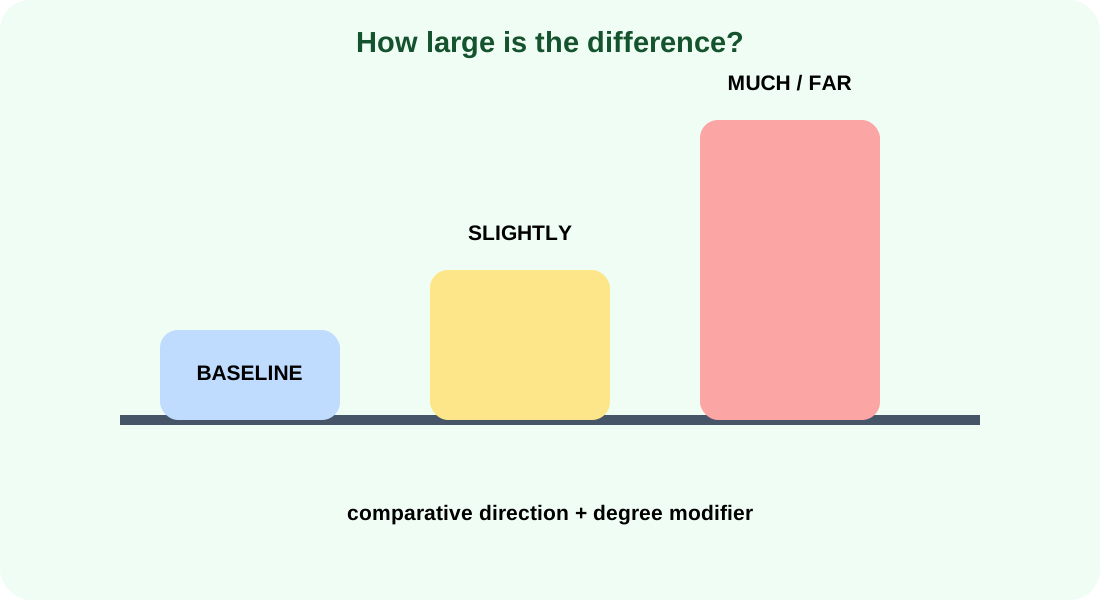
Three useful patterns
- modifier + comparative: far more reliable, slightly less expensive.
- comparative and comparative: The nights are getting longer and longer—continuous change.
- the comparative…, the comparative…: The earlier we leave, the quieter the roads will be—a linked relationship.
Do not mix measurement and impression
If route A takes 40 minutes and route B 42, A is slightly faster. Calling it far faster overstates the data. When no figures are available, make clear that the judgment is approximate.
⚠️ Avoid “more easier”
Standard comparatives normally use either the -er form or more, not both: easier, more useful. Use much easier when you need a strong degree modifier.
✅ Compare in two layers
First form the comparative correctly. Then decide whether the evidence supports a small or large gap, ongoing change, or a relationship between two changing quantities.
📚 Lý thuyết trọng tâm
Mục tiêu: Modify comparatives accurately and use repeated or paired comparison patterns to describe change and relationships.. Khi học Far better or slightly better? Control the degree of comparison, hãy xác định khái niệm, điều kiện áp dụng và mối liên hệ giữa các dữ kiện; không chỉ ghi nhớ kết luận.
🧭 Ví dụ có hướng dẫn
Chọn một tình huống điển hình của bài. Bước 1: ghi dữ kiện và câu hỏi cần giải quyết. Bước 2: chọn khái niệm hoặc quy tắc phù hợp. Bước 3: giải thích từng bước và kiểm tra kết quả với điều kiện ban đầu. Nếu đổi một dữ kiện, hãy dự đoán kết quả thay đổi thế nào.
✍️ Luyện tập
- Tóm tắt bài bằng ba ý: khái niệm, điều kiện và kết luận.
- Tự tạo một ví dụ đúng và một phản ví dụ; chỉ ra điểm quyết định.
- Giải lại ví dụ khi thay đổi một dữ kiện, sau đó nêu cách kiểm chứng.
Checklist tự đánh giá
- Tôi giải thích được “vì sao”, không chỉ nêu đáp án.
- Tôi nhận ra trường hợp không áp dụng được quy tắc.
- Tôi kiểm tra được đơn vị, bằng chứng hoặc tính hợp lí của kết luận.
Cùng nhau hiểu bài sâu hơn
Viết lời giải, công thức, đặt câu hỏi hoặc gửi ảnh phần bạn đang vướng.
Đăng nhập để đặt câu hỏi và tham gia trao đổi.
Chưa có trao đổi nào. Hãy là người đầu tiên đặt câu hỏi nhé.