🎚️ Strong writing does not mean maximal certainty
Academic claims should be no stronger than their evidence. Causes, proves and always make broad commitments. Words such as suggests, may, is associated with and explicit scope can state a defensible conclusion.
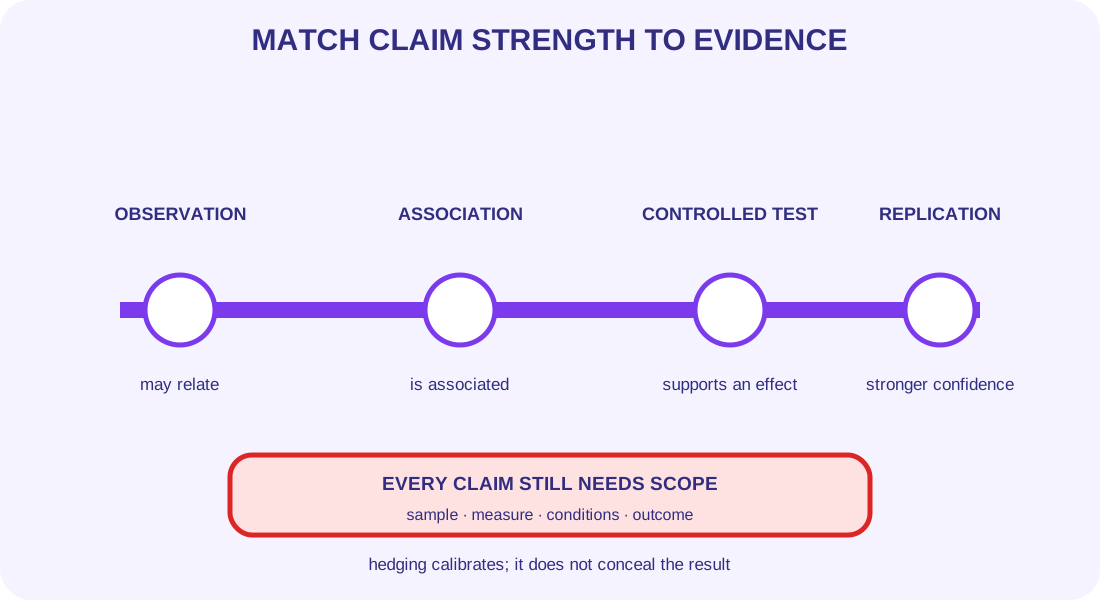
Example: association is not automatically causation
Overclaim: “Screen time causes lower achievement.” Calibrated: “In this observational sample, higher reported screen time was associated with lower test scores.” The revision identifies the sample, measurement and relationship without claiming an intervention effect.
Four calibration tools
- Modal probability: may, might, is likely to.
- Reporting verbs: suggests, indicates, estimates, demonstrates.
- Scope: in this sample, under these conditions, for the measured outcome.
- Quantity: some, many, on average—not vague words when a number is available.
Do not hedge everything
Methods and directly observed results can often be stated plainly: “The sample contained 240 responses.” Unnecessary perhaps can obscure a fact. The key question is which part is observed and which part is inferred.
✍️ Practice
Rewrite three headlines as evidence-matched claims. Underline scope, circle the reporting verb and add one limitation. Then explain what stronger design would justify stronger wording.
📚 Căn cứ biên soạn
- Chương trình GDPT 2018 và mạch nội dung Kết nối tri thức với cuộc sống.
- Nội dung biên soạn độc lập, nhấn mạnh bằng chứng, quy trình và giới hạn của kết luận.
Cùng nhau hiểu bài sâu hơn
Viết lời giải, công thức, đặt câu hỏi hoặc gửi ảnh phần bạn đang vướng.
Đăng nhập để đặt câu hỏi và tham gia trao đổi.
Chưa có trao đổi nào. Hãy là người đầu tiên đặt câu hỏi nhé.