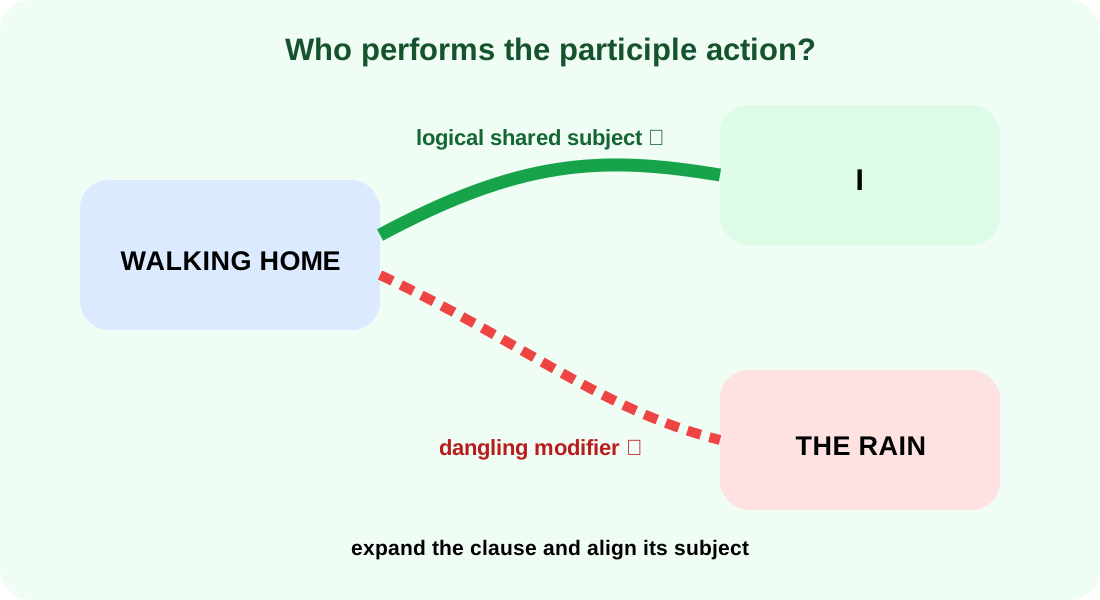
🧩 Who was walking in “Walking home, the rain started”?
A participle clause normally shares its understood subject with the subject of the main clause. The example accidentally says the rain was walking. Write Walking home, I saw the rain start.
Forms and relationships
- Crossing the road, she looked left: active, overlapping action.
- Built in 1920, the house needs repair: passive meaning.
- Having finished the test, he left: completion before the main action.
⚠️ Reduction can hide the connector
A full clause may show cause, time or concession explicitly. Use a participle clause only when the intended relationship is clear from context.
🔎 Expansion test
Expand the modifier into a clause with a subject, then verify that subject matches the main-clause subject and that active/passive and time order remain correct.
📚 Lý thuyết trọng tâm
Mục tiêu: Use present, past and perfect participle clauses while preventing dangling modifiers and preserving logical time and voice.. Khi học Participle clauses: the understood subject must make sense, hãy xác định khái niệm, điều kiện áp dụng và mối liên hệ giữa các dữ kiện; không chỉ ghi nhớ kết luận.
🧭 Ví dụ có hướng dẫn
Chọn một tình huống điển hình của bài. Bước 1: ghi dữ kiện và câu hỏi cần giải quyết. Bước 2: chọn khái niệm hoặc quy tắc phù hợp. Bước 3: giải thích từng bước và kiểm tra kết quả với điều kiện ban đầu. Nếu đổi một dữ kiện, hãy dự đoán kết quả thay đổi thế nào.
✍️ Luyện tập
- Tóm tắt bài bằng ba ý: khái niệm, điều kiện và kết luận.
- Tự tạo một ví dụ đúng và một phản ví dụ; chỉ ra điểm quyết định.
- Giải lại ví dụ khi thay đổi một dữ kiện, sau đó nêu cách kiểm chứng.
Checklist tự đánh giá
- Tôi giải thích được “vì sao”, không chỉ nêu đáp án.
- Tôi nhận ra trường hợp không áp dụng được quy tắc.
- Tôi kiểm tra được đơn vị, bằng chứng hoặc tính hợp lí của kết luận.
Cùng nhau hiểu bài sâu hơn
Viết lời giải, công thức, đặt câu hỏi hoặc gửi ảnh phần bạn đang vướng.
Đăng nhập để đặt câu hỏi và tham gia trao đổi.
Chưa có trao đổi nào. Hãy là người đầu tiên đặt câu hỏi nhé.