✍️ Replacing a few words is not a paraphrase
A responsible paraphrase preserves the source’s meaning but rebuilds the sentence around your own purpose and syntax. Because the idea still comes from a source, attribution is normally required.
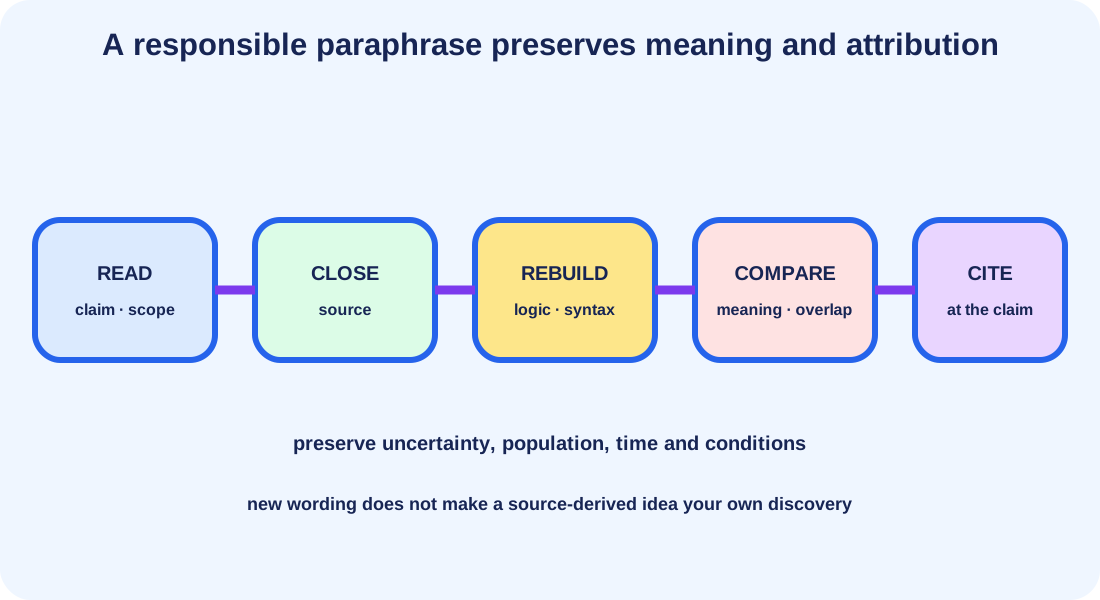
A practical method
- Identify the central claim, scope and qualifications.
- Close or hide the source and explain the idea from memory.
- Change information order and grammar where the logic permits.
- Compare with the original for accuracy and excessive phrase overlap.
- Add the citation at the exact claim it supports.
⚠️ Do not strengthen the source
May contribute to cannot become causes. Preserve uncertainty, population, time and conditions. A fluent sentence can still be academically misleading.
Quotation or paraphrase?
Quote when exact wording is itself evidence or unusually important. Paraphrase when the idea matters more than the wording; summarize when a broader section can be compressed.
📚 Lý thuyết trọng tâm
Mục tiêu: Paraphrase English sources by understanding, restructuring and attributing ideas while distinguishing common knowledge from source-dependent claims.. Khi học Paraphrasing and academic integrity: change the structure, preserve the claim, hãy xác định khái niệm, điều kiện áp dụng và mối liên hệ giữa các dữ kiện; không chỉ ghi nhớ kết luận.
🧭 Ví dụ có hướng dẫn
Chọn một tình huống điển hình của bài. Bước 1: ghi dữ kiện và câu hỏi cần giải quyết. Bước 2: chọn khái niệm hoặc quy tắc phù hợp. Bước 3: giải thích từng bước và kiểm tra kết quả với điều kiện ban đầu. Nếu đổi một dữ kiện, hãy dự đoán kết quả thay đổi thế nào.
✍️ Luyện tập
- Tóm tắt bài bằng ba ý: khái niệm, điều kiện và kết luận.
- Tự tạo một ví dụ đúng và một phản ví dụ; chỉ ra điểm quyết định.
- Giải lại ví dụ khi thay đổi một dữ kiện, sau đó nêu cách kiểm chứng.
Checklist tự đánh giá
- Tôi giải thích được “vì sao”, không chỉ nêu đáp án.
- Tôi nhận ra trường hợp không áp dụng được quy tắc.
- Tôi kiểm tra được đơn vị, bằng chứng hoặc tính hợp lí của kết luận.
Cùng nhau hiểu bài sâu hơn
Viết lời giải, công thức, đặt câu hỏi hoặc gửi ảnh phần bạn đang vướng.
Đăng nhập để đặt câu hỏi và tham gia trao đổi.
Chưa có trao đổi nào. Hãy là người đầu tiên đặt câu hỏi nhé.