✂️ How can two commas change who we mean?
Students who revised passed identifies a subgroup: only the students who revised. The students, who revised, passed presents the students as already identified and adds the comment that they revised.
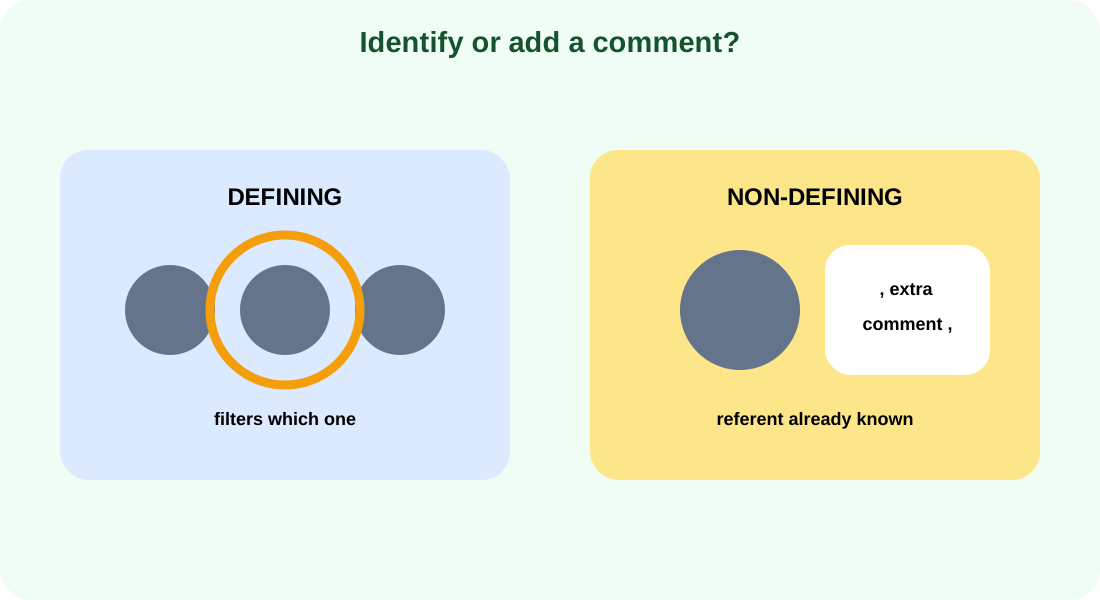
Grammar follows the information job
- Non-defining clauses are set off by commas in writing and pauses in speech.
- That is generally not used as the relative pronoun in a non-defining clause.
- Which may refer to the whole preceding clause: The train was cancelled, which delayed us.
Names are often already identifying
Ms Lan, who teaches chemistry, runs the club. Her name identifies her; the relative clause adds information. But context can require a defining clause: The Lan who called yesterday distinguishes one person from others with the same name.
⚠️ Do not add commas by breath alone
Punctuation represents information structure, not every speaking pause. Removing a defining clause may make the intended person unclear; removing a non-defining clause leaves the core reference intact.
✅ Test deletion and identification
Ask whether the listener already knows the referent. Remove the clause: if reference remains clear and only extra detail disappears, commas are likely appropriate.
📚 Lý thuyết trọng tâm
Mục tiêu: Separate identifying information from optional comment and use commas without changing which person or thing is meant.. Khi học Non-defining relative clauses: extra information needs commas, hãy xác định khái niệm, điều kiện áp dụng và mối liên hệ giữa các dữ kiện; không chỉ ghi nhớ kết luận.
🧭 Ví dụ có hướng dẫn
Chọn một tình huống điển hình của bài. Bước 1: ghi dữ kiện và câu hỏi cần giải quyết. Bước 2: chọn khái niệm hoặc quy tắc phù hợp. Bước 3: giải thích từng bước và kiểm tra kết quả với điều kiện ban đầu. Nếu đổi một dữ kiện, hãy dự đoán kết quả thay đổi thế nào.
✍️ Luyện tập
- Tóm tắt bài bằng ba ý: khái niệm, điều kiện và kết luận.
- Tự tạo một ví dụ đúng và một phản ví dụ; chỉ ra điểm quyết định.
- Giải lại ví dụ khi thay đổi một dữ kiện, sau đó nêu cách kiểm chứng.
Checklist tự đánh giá
- Tôi giải thích được “vì sao”, không chỉ nêu đáp án.
- Tôi nhận ra trường hợp không áp dụng được quy tắc.
- Tôi kiểm tra được đơn vị, bằng chứng hoặc tính hợp lí của kết luận.
Cùng nhau hiểu bài sâu hơn
Viết lời giải, công thức, đặt câu hỏi hoặc gửi ảnh phần bạn đang vướng.
Đăng nhập để đặt câu hỏi và tham gia trao đổi.
Chưa có trao đổi nào. Hãy là người đầu tiên đặt câu hỏi nhé.