🎚️ “Must”, “have to”, “should” and “might” do not sit at the same level
Modal choices encode strength and source: a rule can impose an obligation, a speaker can give advice, or evidence can support only a possibility. Translate the situation, not one Vietnamese word.
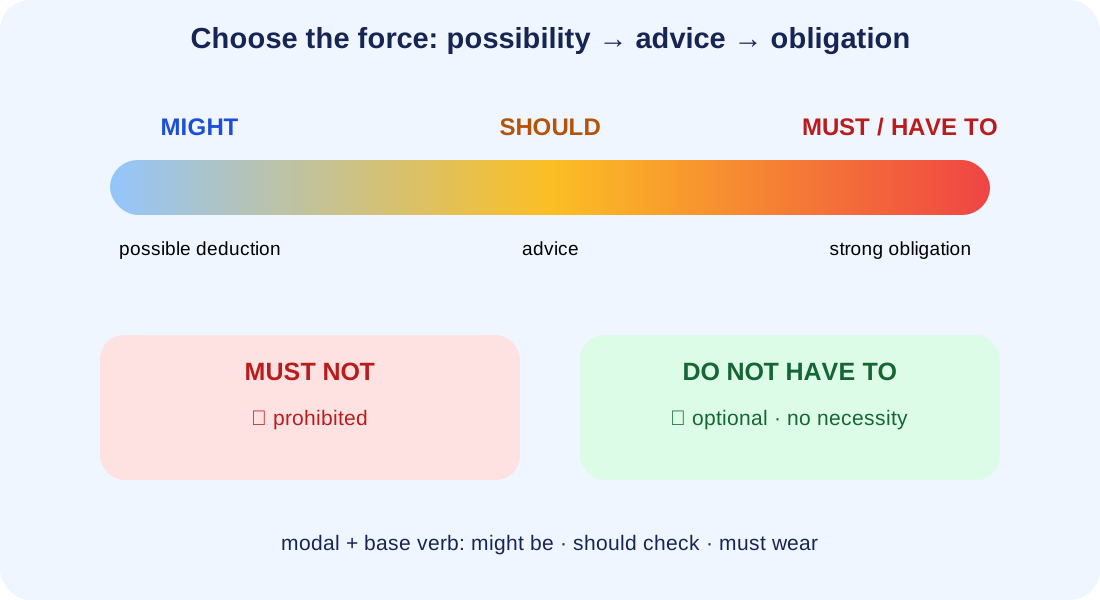
Meaning before form
- must / have to: strong obligation. Have to often highlights an external rule; must may sound like the speaker's authority or strong insistence.
- should: recommendation, not usually a legal requirement.
- might: possibility or a cautious deduction. Evidence may support the idea without making it certain.
Two negatives that are not synonyms
“You must not enter” means entry is prohibited. “You do not have to enter” means entry is optional. The first blocks the action; the second removes necessity but still allows it.
⚠️ A modal takes the base verb
Use “might be”, “should check”, “must wear”—not “might to be” or “should checked”. For past criticism or deduction, a different pattern such as should have + past participle is required.
✅ Name the force of the sentence
Before choosing a modal, label the message: law, speaker's command, advice, no necessity, prohibition or uncertain deduction. Then choose the form that matches that force.
📚 Lý thuyết trọng tâm
Mục tiêu: Separate obligation, advice, prohibition, lack of necessity, and deduction.. Khi học Must, have to, should, might: strength and source of meaning, hãy xác định khái niệm, điều kiện áp dụng và mối liên hệ giữa các dữ kiện; không chỉ ghi nhớ kết luận.
🧭 Ví dụ có hướng dẫn
Chọn một tình huống điển hình của bài. Bước 1: ghi dữ kiện và câu hỏi cần giải quyết. Bước 2: chọn khái niệm hoặc quy tắc phù hợp. Bước 3: giải thích từng bước và kiểm tra kết quả với điều kiện ban đầu. Nếu đổi một dữ kiện, hãy dự đoán kết quả thay đổi thế nào.
✍️ Luyện tập
- Tóm tắt bài bằng ba ý: khái niệm, điều kiện và kết luận.
- Tự tạo một ví dụ đúng và một phản ví dụ; chỉ ra điểm quyết định.
- Giải lại ví dụ khi thay đổi một dữ kiện, sau đó nêu cách kiểm chứng.
Checklist tự đánh giá
- Tôi giải thích được “vì sao”, không chỉ nêu đáp án.
- Tôi nhận ra trường hợp không áp dụng được quy tắc.
- Tôi kiểm tra được đơn vị, bằng chứng hoặc tính hợp lí của kết luận.
Cùng nhau hiểu bài sâu hơn
Viết lời giải, công thức, đặt câu hỏi hoặc gửi ảnh phần bạn đang vướng.
Đăng nhập để đặt câu hỏi và tham gia trao đổi.
Chưa có trao đổi nào. Hãy là người đầu tiên đặt câu hỏi nhé.