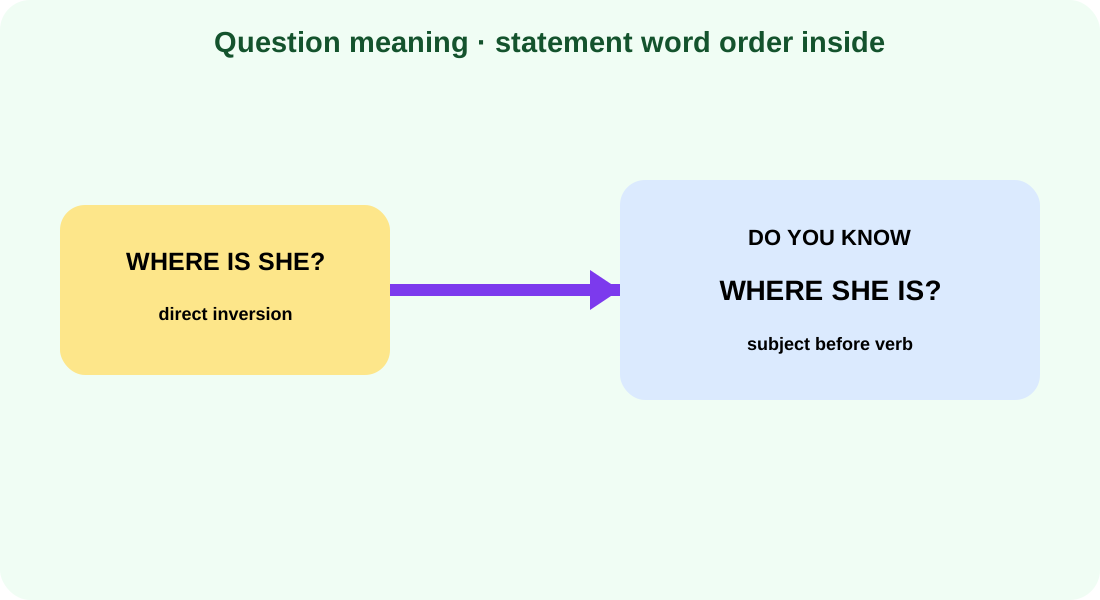
❓ Why is it “Do you know where she is?”—not “where is she”?
The main clause Do you know…? already carries question grammar. The embedded question uses statement order: question word + subject + verb. Its meaning remains a question, but its syntax is subordinate.
Two routes
- Wh-question: Where does the bus stop? → Could you tell me where the bus stops?
- Yes/no question: Is the library open? → Do you know if/whether the library is open?
- The final question mark depends on the whole sentence: I wonder where it is. is a statement.
Keep tense and time meaning
Can you tell me when the lesson starts? uses present simple for a schedule. Politeness does not automatically force past tense. A past reporting context may cause other tense changes, but word order remains statement-like.
⚠️ Remove auxiliary do inside
Not Could you tell me where does he live? Write where he lives. Keep auxiliary forms that carry tense or aspect: Do you know what she has finished?
✅ Find the inner clause
Choose wh-word or if/whether, write subject before verb, remove question-only do, then check punctuation from the outer sentence.
📚 Lý thuyết trọng tâm
Mục tiêu: Embed a question after polite or reporting phrases without keeping direct-question inversion.. Khi học Indirect questions: polite opening, statement word order, hãy xác định khái niệm, điều kiện áp dụng và mối liên hệ giữa các dữ kiện; không chỉ ghi nhớ kết luận.
🧭 Ví dụ có hướng dẫn
Chọn một tình huống điển hình của bài. Bước 1: ghi dữ kiện và câu hỏi cần giải quyết. Bước 2: chọn khái niệm hoặc quy tắc phù hợp. Bước 3: giải thích từng bước và kiểm tra kết quả với điều kiện ban đầu. Nếu đổi một dữ kiện, hãy dự đoán kết quả thay đổi thế nào.
✍️ Luyện tập
- Tóm tắt bài bằng ba ý: khái niệm, điều kiện và kết luận.
- Tự tạo một ví dụ đúng và một phản ví dụ; chỉ ra điểm quyết định.
- Giải lại ví dụ khi thay đổi một dữ kiện, sau đó nêu cách kiểm chứng.
Checklist tự đánh giá
- Tôi giải thích được “vì sao”, không chỉ nêu đáp án.
- Tôi nhận ra trường hợp không áp dụng được quy tắc.
- Tôi kiểm tra được đơn vị, bằng chứng hoặc tính hợp lí của kết luận.
Cùng nhau hiểu bài sâu hơn
Viết lời giải, công thức, đặt câu hỏi hoặc gửi ảnh phần bạn đang vướng.
Đăng nhập để đặt câu hỏi và tham gia trao đổi.
Chưa có trao đổi nào. Hãy là người đầu tiên đặt câu hỏi nhé.