1. Start with meaning
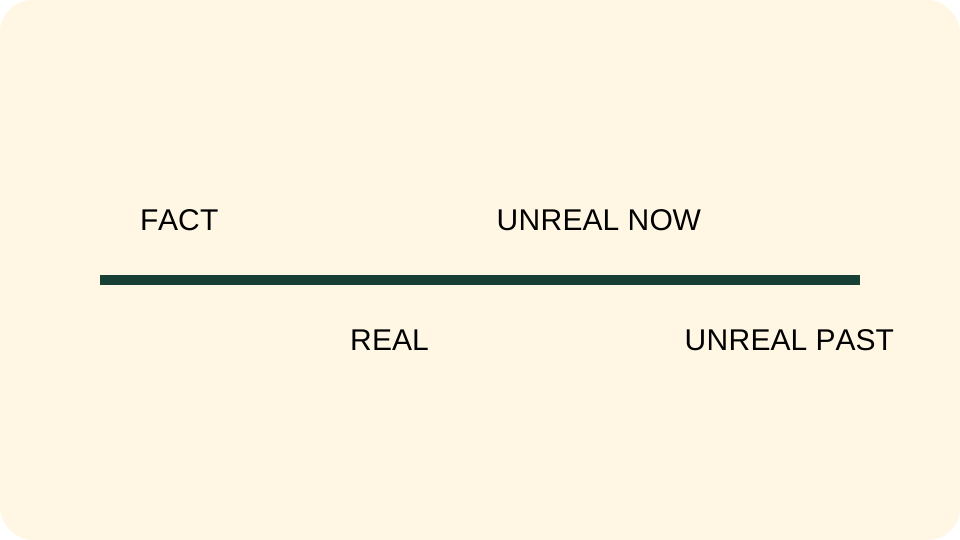
A conditional links a condition with its result. Choose the form by asking whether the situation is generally true, realistically possible, imaginary now, or impossible because it belongs to the past.
2. Four central patterns
- Zero: if + present, present — facts and routines: If water reaches 100°C, it boils.
- First: if + present, will + base verb — a real future possibility: If it rains, we will stay home.
- Second: if + past, would + base verb — an unreal or unlikely present/future: If I had more time, I would learn Korean.
- Third: if + past perfect, would have + V3 — an unreal past: If she had left earlier, she would have caught the bus.
3. Important details
Do not normally put will in the if-clause. In formal second conditional sentences, were can be used for all persons: If I were you… Unless can replace if…not but should not be followed by another negative.
4. Mixed time
A past condition may have a present result: If I had studied medicine, I would be a doctor now. The if-clause is third conditional in form; the result uses would be because it describes now.
5. Diagnostic method
Underline the time reference, decide whether the speaker sees it as real or unreal, then build each clause. This is safer than choosing a pattern from one verb alone.
📚 Lý thuyết trọng tâm
Mục tiêu: Phân biệt zero, first, second và third conditional theo ý nghĩa thời gian, không học máy móc theo số loại.. Khi học Conditional sentences: real, unreal and past situations, hãy xác định khái niệm, điều kiện áp dụng và mối liên hệ giữa các dữ kiện; không chỉ ghi nhớ kết luận.
🧭 Ví dụ có hướng dẫn
Chọn một tình huống điển hình của bài. Bước 1: ghi dữ kiện và câu hỏi cần giải quyết. Bước 2: chọn khái niệm hoặc quy tắc phù hợp. Bước 3: giải thích từng bước và kiểm tra kết quả với điều kiện ban đầu. Nếu đổi một dữ kiện, hãy dự đoán kết quả thay đổi thế nào.
✍️ Luyện tập
- Tóm tắt bài bằng ba ý: khái niệm, điều kiện và kết luận.
- Tự tạo một ví dụ đúng và một phản ví dụ; chỉ ra điểm quyết định.
- Giải lại ví dụ khi thay đổi một dữ kiện, sau đó nêu cách kiểm chứng.
Checklist tự đánh giá
- Tôi giải thích được “vì sao”, không chỉ nêu đáp án.
- Tôi nhận ra trường hợp không áp dụng được quy tắc.
- Tôi kiểm tra được đơn vị, bằng chứng hoặc tính hợp lí của kết luận.
Cùng nhau hiểu bài sâu hơn
Viết lời giải, công thức, đặt câu hỏi hoặc gửi ảnh phần bạn đang vướng.
Đăng nhập để đặt câu hỏi và tham gia trao đổi.
Chưa có trao đổi nào. Hãy là người đầu tiên đặt câu hỏi nhé.